
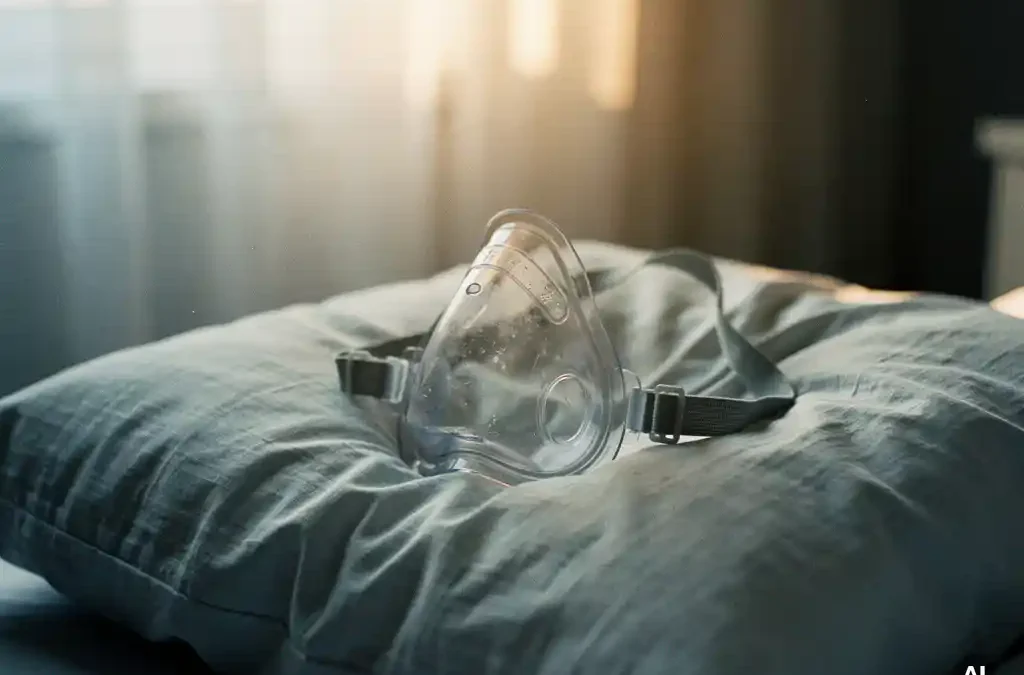
A CPAP mask suddenly starts leaking most often because the mask cushion has worn down, your face position has shifted during sleep, or the headgear has stretched and lost its tension. These are the most common culprits, and the good news is that most CPAP mask leaks can be fixed quickly at home. Below, we walk through the key questions CPAP users ask when their mask stops sealing properly.
What Causes a CPAP Mask to Suddenly Start Leaking?
A CPAP mask leak happens when air escapes from the seal between the mask cushion and your skin. The most common causes are a worn or degraded cushion, a shift in your sleeping position, headgear that has stretched over time, or a change in your facial structure such as weight loss, weight gain, or facial hair growth. Sometimes the culprit is simply a dirty mask with skin oils and residue breaking down the seal.
It is worth noting that masks do not always fail gradually. A sudden CPAP air leak can appear overnight if you started sleeping on your side after always sleeping on your back, or if the mask was reassembled incorrectly after cleaning. Even a small piece of hair caught under the cushion edge can disrupt the CPAP mask seal enough to cause noticeable air loss.
- Cushion degradation: Silicone and foam cushions break down with daily use and skin contact
- Positional changes: Rolling onto your side or stomach puts pressure on the mask frame
- Stretched headgear: Elastic loses tension after months of use
- Facial changes: Weight fluctuations or new facial hair alter the contact surface
- Dirty cushion: Oils and residue prevent a firm seal from forming
How Do You Know If Your CPAP Mask Leak Is Serious?
A CPAP mask leak is serious when it is large enough to reduce your therapy pressure, cause you to wake up, or leave you with symptoms of untreated sleep apnea such as morning headaches, daytime fatigue, or dry mouth. Most CPAP machines track leak data, and a leak rate consistently above the threshold set by your equipment provider signals that your therapy is being compromised.
Your CPAP device’s built-in reporting is your best diagnostic tool. Many modern machines display a leak rate on the screen each morning or through a connected app. A small amount of intentional vent flow is built into every mask, so some air movement is normal. The concern arises when unintentional leak volume climbs high enough that the machine cannot maintain your prescribed pressure throughout the night.
Pay attention to how you feel in the morning. If your CPAP therapy used to leave you refreshed but you are now waking up tired, dry, or with a headache, a significant air leak may be undermining your treatment even if you slept through the night without noticing it.
Can a Worn-Out Mask Cushion Cause Air Leaks?
Yes, a worn-out mask cushion is one of the leading causes of CPAP air leaks. Cushions are made from silicone, gel, or foam materials that gradually break down from nightly contact with skin oils, cleaning products, and pressure. Most cushions need replacing every one to three months to maintain a reliable seal, and going beyond that window significantly increases the risk of leaks.
You can often tell a cushion is past its useful life by looking at it closely. Signs of wear include visible discoloration, a rough or sticky texture, small cracks or tears along the edges, and a cushion that feels thinner or less pliable than it did when new. Even if the cushion looks intact, a subtle loss of softness can prevent it from conforming to the contours of your face the way it should.
Replacing the cushion alone, without replacing the entire mask frame, is usually enough to restore a proper seal. Cushions are available as standalone parts for most mask models, making this one of the most cost-effective fixes for a leaking CPAP mask.
How Do You Fix a Leaking CPAP Mask at Home?
Most CPAP mask leaks can be fixed at home by adjusting the fit, cleaning the cushion, or replacing worn components. Start with the simplest fixes first before assuming you need a new mask entirely.
- Wash the cushion: Clean the mask cushion with mild soap and warm water to remove skin oils that break down the seal. Do this daily if possible.
- Readjust the headgear: Loosen all straps, put the mask on your face while lying in your sleep position, then gently re-tighten until snug. Over-tightening actually distorts the cushion and worsens leaks.
- Check for damage: Inspect the cushion, frame, and headgear for cracks, tears, or stretched elastic. Replace any component showing visible wear.
- Try a different sleep position: If you recently started sleeping on your side or stomach, experiment with positioning to find an angle that maintains the seal.
- Address facial hair: Even a few days of stubble can disrupt a silicone cushion seal. Shaving before bed or switching to a mask style designed for facial hair can help.
- Consider a mask liner: Thin fabric liners sit between the cushion and your skin, improving the seal for people whose skin texture or oiliness makes direct silicone contact difficult.
If none of these steps resolve the CPAP air leak, the issue may be that your current mask style is no longer the right fit for your face. Our CPAP mask fitting tool can help you identify a mask that matches your facial measurements and sleep habits more precisely.
When Should You See a Sleep Specialist About CPAP Leaks?
You should see a sleep specialist about CPAP leaks when home adjustments have not resolved the problem, when your leak data remains elevated despite replacing the cushion and readjusting the fit, or when your sleep apnea symptoms have returned. Persistent leaks that cannot be fixed at home often point to a mask style mismatch, a pressure setting that needs adjustment, or an underlying change in your breathing needs.
A respiratory therapist or sleep specialist can review your machine’s data, assess whether your prescribed pressure is still appropriate, and fit you with a mask that better suits your current facial structure and sleeping habits. This is especially important if you have experienced significant weight changes, started sleeping in a different position consistently, or switched to a new CPAP machine model.
Do not wait too long. Untreated sleep apnea carries real health consequences, and a mask that leaks enough to reduce your therapy pressure is functionally similar to not using CPAP at all. If your morning symptoms have returned, that is a clear signal to seek support sooner rather than later. At Dream Sleep Respiratory, we offer ongoing follow-up appointments and CPAP adjustments across our Alberta locations to help you get back to effective, comfortable therapy.
Frequently Asked Questions
How often should I replace my CPAP mask cushion to prevent leaks?
Most CPAP mask cushions should be replaced every one to three months, depending on how often you use your machine and how thoroughly you clean it. Daily users who clean their cushion regularly may get closer to three months, while those who skip cleaning may notice degradation sooner. A good rule of thumb is to inspect your cushion monthly — if it looks discolored, feels sticky or stiff, or you notice an uptick in your leak rate, it is time to replace it regardless of how long you have had it.
Can over-tightening my headgear actually make leaks worse?
Yes, over-tightening is one of the most common mistakes CPAP users make when trying to stop a leak. Pulling the straps too tight distorts the shape of the cushion, causing it to fold, buckle, or pull away from the face rather than conforming to it. The correct approach is to adjust the headgear while lying in your actual sleep position, tightening just enough to feel a gentle, even contact — not a firm press — across the cushion’s sealing edge.
My CPAP machine shows a low leak rate, but I still wake up with a dry mouth. Is my mask still leaking?
Dry mouth in CPAP users can have more than one cause, so a low reported leak rate does not necessarily rule out a problem. If you breathe through your mouth during sleep, air can escape past your lips even when your mask is sealing correctly — this is especially common with nasal masks or nasal pillow masks. You may benefit from adding a chin strap, switching to a full-face mask, or increasing your humidifier settings. It is worth discussing this symptom with your respiratory therapist, as it can also indicate that your pressure settings need fine-tuning.
What mask style works best if I move around a lot during sleep?
Active sleepers who change positions frequently throughout the night often do best with nasal pillow masks, which have a minimal footprint and fewer contact points that can shift or dislodge. Full-face masks with magnetic headgear clips or flexible frame designs are another option for side sleepers who need broader pressure coverage. The key is choosing a mask with a low-profile frame that does not catch on pillows and headgear that maintains tension through movement — a CPAP mask fitting assessment can help match you to the right style for your specific sleep habits.
Can gaining or losing weight really change how my CPAP mask fits?
Absolutely — even modest changes in body weight can alter the shape and volume of your face, particularly around the cheeks, nose bridge, and jaw. Weight gain tends to add soft tissue around the face, which can cause a previously well-fitting mask to feel too tight or to press unevenly. Weight loss has the opposite effect, often creating gaps where the cushion no longer makes full contact with the skin. If you have experienced a weight change of ten pounds or more, it is a good idea to schedule a mask refitting to confirm your current mask size and style are still appropriate.
Are there any products that can help improve my mask seal without replacing the cushion?
Yes, several accessories are designed to improve an imperfect seal before you commit to replacing components. Mask liners — thin fabric covers that sit between the silicone cushion and your skin — are particularly effective for people with oily skin, sensitive skin, or facial hair that disrupts the seal. Mask fit pads and cushion inserts can also add a small amount of volume to compensate for a slightly loose fit. These are useful short-term solutions, but they are not a substitute for replacing a genuinely worn cushion or getting a proper mask refitting.
How do I read my CPAP machine's leak data, and what number should I be concerned about?
Most CPAP machines display leak data as a flow rate measured in liters per minute (L/min), and many connected apps like ResMed’s myAir or Philips’ DreamMapper break this down nightly. Every mask has a built-in intentional vent flow — typically between 20 and 40 L/min — which is normal and expected. The number to watch is your unintentional leak rate; most clinicians consider a total leak rate consistently above 24 L/min (or whatever threshold your provider has set) to be clinically significant. If your machine flags your leak rate as ‘large’ or you see a pattern of elevated readings over several nights, contact your equipment provider or sleep specialist for a review.