
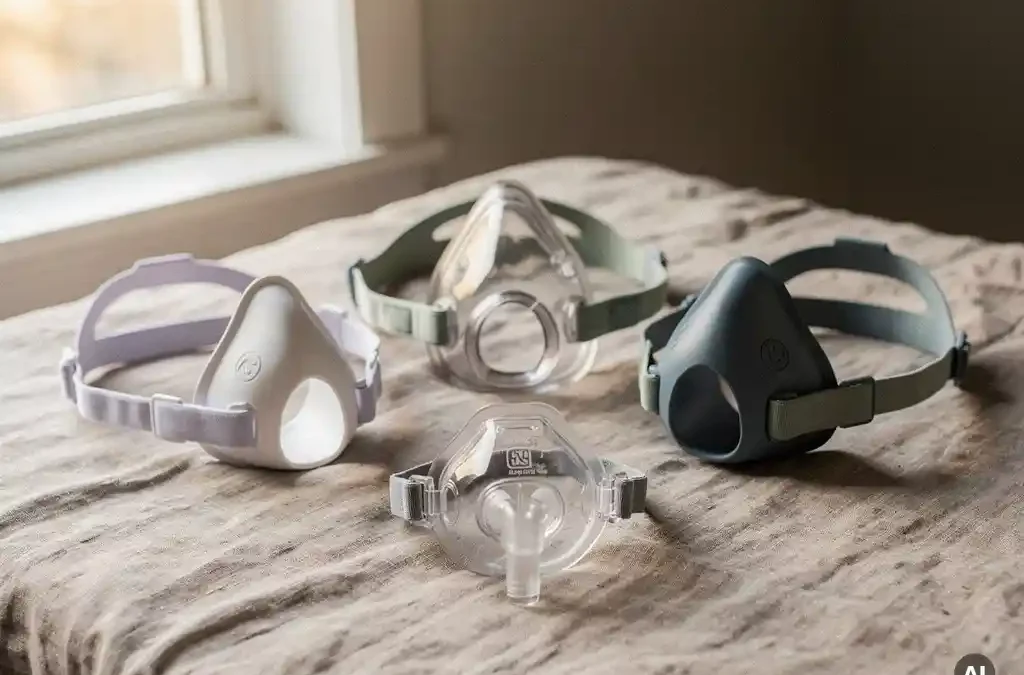
If you have tried several CPAP masks without finding the right one, the most likely reason is that mask fit, style, and breathing habits are highly individual, and most people need guidance to match these factors correctly. A mask that works well for one person can cause leaks, pressure sores, or discomfort for another, even at the same pressure settings. The questions below break down exactly why CPAP mask problems happen and how to solve them.
What makes a CPAP mask the wrong fit for you?
A CPAP mask is the wrong fit when it fails to create a consistent seal against your face, causes skin irritation, or makes sleep more difficult rather than easier. The most common causes of a poor fit are the wrong mask size, an incompatible mask style for your face shape, and incorrect headgear tension. Any one of these issues can undermine your entire CPAP therapy experience.
Face shape plays a bigger role than most people expect. Narrower faces, wider noses, prominent cheekbones, and facial hair can all affect how a mask seals. Beyond anatomy, the way you sleep matters too. Side sleepers often struggle with full-face masks that shift during the night, while back sleepers may tolerate them without issue. Skin sensitivity is another overlooked factor, as some people react to the silicone cushion material itself, which causes redness and discomfort regardless of how well the mask fits structurally.
Headgear tension is a common source of both leaks and pain. Tightening straps to stop a leak often creates pressure points on the nose bridge or cheeks, which then cause new problems. The goal is a snug but comfortable seal, not a tight one.
What are the different types of CPAP masks available?
There are three main types of CPAP masks: nasal pillow masks, nasal masks, and full-face masks. Each type covers a different area of the face and suits different breathing patterns, pressure levels, and personal preferences. Choosing the right category is the first step toward finding a mask that actually works for you.
- Nasal pillow masks are the smallest and most minimal option. They use two small cushioned inserts that sit at the entrance to the nostrils rather than covering the nose entirely. They are ideal for people who feel claustrophobic in larger masks, those who wear glasses, or people who sleep on their side.
- Nasal masks cover the nose from the bridge down to the upper lip. They offer a more secure seal than nasal pillows and handle higher pressure settings better, making them a popular choice for people with moderate to severe sleep apnea.
- Full-face masks cover both the nose and mouth. They are the right choice for mouth breathers and for people who need higher CPAP pressures. They are also useful when nasal congestion is a recurring issue, since you can still breathe through your mouth if your nose becomes blocked.
Some manufacturers also offer hybrid masks and total-face masks, which can address very specific fit challenges. The right type is rarely obvious without trying more than one, which is why professional fitting guidance makes a significant difference.
Why does a CPAP mask leak even when it feels secure?
A CPAP mask can leak even when it feels secure because the seal is dynamic, not static. Pressure from the machine, movement during sleep, and the natural relaxation of facial muscles all change how the mask sits against your skin throughout the night. A mask that feels fine when you first put it on may shift enough during sleep to allow air to escape.
Several specific factors cause leaks in masks that initially feel well fitted:
- Cushion wear: The silicone or gel cushion degrades over time and loses its ability to form a proper seal. Most cushions need to be replaced every one to three months.
- Sleeping position changes: Rolling onto your side or stomach during sleep can press the mask against the pillow and break the seal at the edges.
- Mouth breathing in a nasal mask: If you use a nasal mask but breathe through your mouth during sleep, air escapes through your mouth, creating pressure loss that the machine compensates for by increasing airflow, which can then push the nasal mask off its seal.
- Wrong cushion size: Many masks come in small, medium, and large cushion sizes. Using the wrong cushion size for your nose or face is one of the most frequent causes of persistent leaks.
Your CPAP machine’s data, if it has a built-in leak detection feature, can tell you how significant your nightly leak rate is. A high leak rate is a reliable signal that something about the mask fit needs to change.
How do you know which CPAP mask type suits your breathing style?
The CPAP mask type that suits your breathing style depends primarily on whether you breathe through your nose, your mouth, or both during sleep. Nose-only breathers are good candidates for nasal pillow or nasal masks, while mouth breathers need a full-face mask to prevent air from escaping. Your prescribed pressure level and any nasal congestion issues also influence which type will work reliably for you.
A practical way to assess your breathing style is to think about whether you wake up with a dry mouth. Consistent morning dry mouth is a strong sign that you breathe through your mouth during sleep, even if you fall asleep breathing through your nose. If you have been using a nasal mask and experiencing this, switching to a full-face mask often resolves both the dry mouth and the leak problem in one step.
Pressure level matters too. Higher CPAP pressures create more force against the mask seal. Nasal pillow masks can struggle to maintain a seal at higher pressures, so if your prescribed pressure is on the higher end, a nasal mask or full-face mask will generally provide a more stable seal. A sleep specialist can review your pressure data alongside your comfort complaints to help narrow down which mask category is the right starting point.
Should you ask a sleep specialist before switching CPAP masks?
Yes, you should consult a sleep specialist before switching CPAP masks, especially if you have already tried multiple options without success. A specialist can assess your facial anatomy, review your machine’s data, evaluate your leak rate, and recommend a specific mask type and size based on your individual profile rather than trial and error. This targeted approach saves time, money, and frustration.
Switching masks without guidance often leads to cycling through options that share the same underlying incompatibility with your face shape or breathing pattern. A respiratory therapist or sleep specialist can identify patterns in your data that point to the real issue, whether that is a sizing problem, a cushion material sensitivity, a pressure setting that needs adjustment, or a combination of factors.
At Dream Sleep Respiratory, we offer personalized CPAP mask fitting support to help patients across Alberta find a mask that works with their specific needs. Our respiratory therapists review your therapy data and sleep habits to guide you toward the right solution rather than sending you back to the shelf to guess again. If you are struggling with CPAP mask problems and have not yet spoken with a specialist, that conversation is the most efficient next step you can take toward comfortable, effective therapy.
Frequently Asked Questions
How long does it typically take to adjust to a new CPAP mask?
Most people need one to two weeks to fully adjust to a new CPAP mask, though some adapt within a few nights. During this period, it helps to wear the mask for short periods while awake — such as while watching TV — before using it for a full night’s sleep. If significant discomfort, leaks, or skin irritation persist beyond two weeks, that is a strong signal the mask is not the right fit rather than simply an adjustment issue.
Can I use a CPAP mask if I have a beard or facial hair?
Yes, but facial hair does make achieving a consistent seal more challenging, particularly with nasal and full-face masks that rely on a silicone cushion pressing against the skin. Nasal pillow masks are generally the best option for people with beards, since the cushions insert directly into the nostrils rather than sealing against the surrounding skin. Some mask brands also offer cushion materials specifically designed to conform better around facial hair, so it is worth asking your respiratory therapist about these options.
What should I do if my CPAP mask leaves red marks or pressure sores on my face?
Red marks after a short adjustment period are common, but persistent pressure sores or skin breakdown are a sign that the mask is either the wrong size, too tight, or incompatible with your skin type. First, check that your headgear is not over-tightened — a properly fitted mask should seal with only light strap tension. If redness continues, ask your sleep specialist about trying a different cushion material, such as memory foam or gel, or a mask style that contacts a different area of your face.
Is it normal to need a different CPAP mask as time goes on, even if my original one worked well?
Yes, it is completely normal for mask needs to change over time. Weight fluctuations, changes in nasal anatomy, aging skin, shifts in sleeping position habits, and pressure prescription adjustments can all affect how well a previously successful mask continues to perform. If a mask that worked well for months or years is suddenly causing leaks or discomfort, a reassessment with a respiratory therapist is a good idea rather than assuming the problem is with the equipment alone.
How often should CPAP mask components be replaced, and does this affect fit?
Yes, component wear directly affects mask fit and seal quality. Cushions and pillows should generally be replaced every one to three months, headgear every six months, and the mask frame every six to twelve months, though your specific manufacturer’s guidelines may vary. A degraded cushion loses its flexibility and can no longer conform to your face properly, which is one of the most common — and most overlooked — causes of sudden leaks in a mask that previously worked well.
What if I feel claustrophobic or anxious wearing a CPAP mask?
Claustrophobia and mask anxiety are among the most common barriers to CPAP adherence, and they are very manageable with the right approach. Starting with the smallest, most minimal mask style — typically a nasal pillow mask — can significantly reduce the feeling of confinement. Gradual desensitization, such as wearing the mask without the machine running during relaxed waking hours, also helps your brain learn to associate the mask with comfort rather than restriction. If anxiety remains a significant obstacle, speaking with your sleep specialist about behavioral support strategies is a worthwhile step.
Can children or people with smaller faces use standard CPAP masks?
Standard adult CPAP masks are not appropriate for children or adults with very small facial structures, as an improper size creates both fit and safety concerns. Most major mask manufacturers offer small and extra-small adult sizes, and some produce pediatric-specific mask lines for younger patients. If standard sizing is not working for you or a family member, a respiratory therapist can measure facial dimensions precisely and identify manufacturers that offer the size range needed for an effective, comfortable seal.
Related Articles
- What is the best sleep schedule to support healthy testosterone in men?
- How does the loss of progesterone affect deep sleep during menopause?
- How many hours of sleep do women need during menopause?
- How to Get a Referral for a Level 3 Sleep Study in Alberta
- How Oxygen Concentrators Generate Medical-Grade Oxygen