
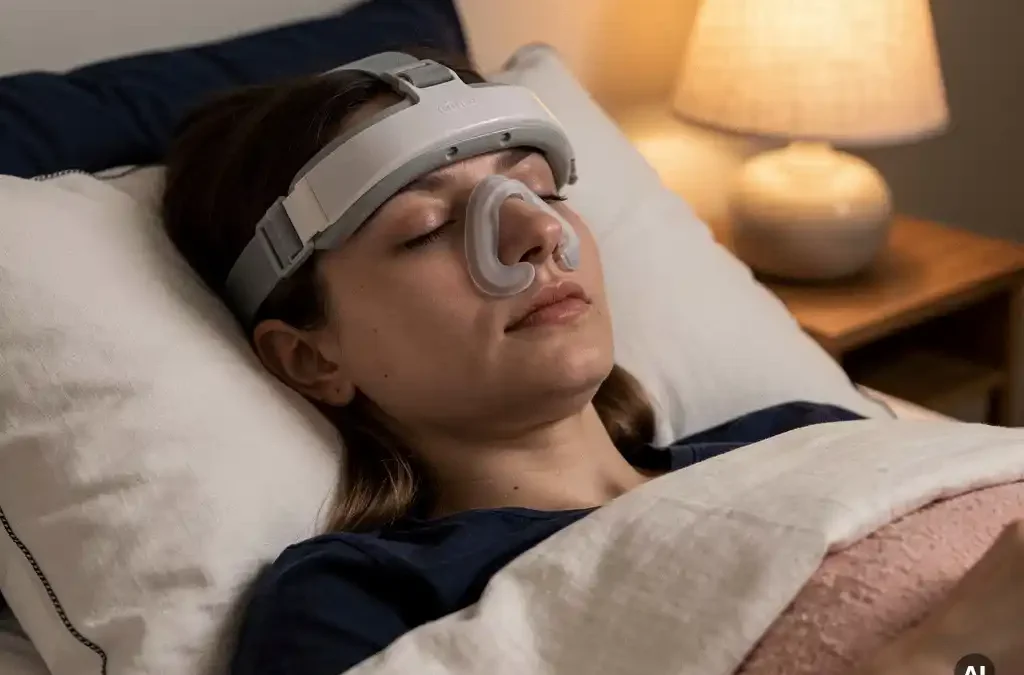
A comfortable CPAP mask should feel snug but never tight, creating a secure seal against your skin without causing pressure, pain, or pinching. It should stay in place throughout the night without needing constant readjustment, and it should not dig into your face, leave deep marks, or make you feel claustrophobic. If your mask meets those criteria, you are on the right track. The sections below answer the most common questions about CPAP mask comfort so you can get the restful sleep you deserve.
How Tight Should a CPAP Mask Fit?
A CPAP mask should fit firmly enough to maintain an airtight seal without pressing uncomfortably against your face. The right fit means no air leaking around the edges, no red welts after removal, and no need to over-tighten the headgear straps. If you are cranking the straps down to stop leaks, the mask is likely the wrong size or style for your face shape.
A good rule of thumb is to put the mask on while lying in your sleep position and connect it to your CPAP machine. If you hear or feel air escaping around the cushion, make small strap adjustments one step at a time. Most masks have separate adjustments for the top, sides, and chin, so work through them gradually. The goal is the least tension required to achieve a proper seal, not the maximum tension the straps allow.
If you find yourself tightening your mask more and more over time, that is a sign the cushion has worn out and needs replacing rather than a reason to keep adding pressure.
What Sensations Are Normal When Wearing a CPAP Mask?
When you first start CPAP therapy, some mild sensations are completely normal and typically fade within a few weeks as your body adjusts. A slight awareness of the mask on your face, the feeling of air pressure in your nose or mouth, and mild dryness in the morning are all common early experiences. These are not signs that something is wrong with your mask or your therapy.
What is not normal is persistent pain, numbness, skin irritation that worsens over time, or a feeling that you cannot breathe comfortably. Claustrophobia is also common at first, particularly with full-face masks, but if it does not ease with gradual acclimatization, it may be worth exploring a different mask style.
A helpful tip for new CPAP users is to wear the mask for short periods during the day while awake, perhaps while watching television, before committing to a full night. This helps your brain and body get used to the sensation without the added pressure of trying to fall asleep at the same time.
Why Does My CPAP Mask Leave Marks on My Face?
Temporary indentations or light marks on your face after removing your CPAP mask are normal and usually fade within an hour. These occur simply because the cushion has been resting against your skin for several hours. However, deep red marks, welts, sores, or marks that last for hours into the morning are signs that your mask is too tight, poorly fitted, or worn out.
A few common causes of excessive marking include:
- Over-tightened straps: The most frequent culprit. If you are pulling the headgear tight to stop leaks, you are likely applying too much pressure to the skin.
- Wrong mask size: A mask that is too small will press harder against your face even at normal strap tension.
- Worn cushion: An old cushion loses its soft, pliable quality and becomes firmer, increasing pressure on contact points.
- Wrong mask style for your face shape: Some face shapes do not suit certain mask designs, leading to uneven pressure distribution.
If you are consistently waking up with significant marks, it is worth reassessing your mask fit rather than simply accepting it as part of the process. CPAP therapy comfort is achievable, and no one should feel like they are enduring their treatment.
What’s the Difference Between CPAP Mask Types for Comfort?
The three main CPAP mask styles each offer a distinct comfort experience, and the right choice depends on how you breathe, how you sleep, and what feels tolerable on your face. No single type is universally the most comfortable, but understanding the differences helps you narrow down the best fit for your needs.
Nasal Pillow Masks
Nasal pillow masks are the most minimal option, using small cushioned inserts that sit at the entrance of the nostrils rather than covering the nose. They are lightweight, offer a wide field of vision, and cause the least contact with the face, making them a popular choice for people who feel claustrophobic with larger masks. They work best for those who breathe through their nose and sleep on their side or stomach.
Nasal Masks
Nasal masks cover the nose entirely with a triangular or contoured cushion. They provide a larger sealing surface than nasal pillows, which can make them easier to fit across a range of face shapes. They are a solid middle-ground option that delivers effective pressure while remaining less bulky than a full-face mask.
Full-Face Masks
Full-face masks cover both the nose and mouth, making them the right choice for mouth breathers or people whose prescribed CPAP pressure is high enough that nasal-only masks struggle to maintain a seal. They have more contact points with the face, which can feel more restrictive at first, but many people find them very comfortable once adjusted properly. If you frequently wake up with a dry mouth on a nasal mask, a full-face mask may solve the problem entirely.
How Do You Know If Your CPAP Mask Needs to Be Replaced?
Your CPAP mask needs to be replaced when the cushion no longer seals properly, the materials show visible wear, or you notice increased leaking, skin irritation, or discomfort that was not previously present. Most CPAP cushions last one to three months with daily use, while mask frames and headgear typically last six to twelve months.
Signs that it is time for a replacement include:
- Air leaking around the cushion even at correct strap tension
- The cushion feels noticeably stiffer or less pliable than when it was new
- Visible cracking, discolouration, or breakdown of the silicone or foam
- Persistent skin irritation or new pressure marks in areas that were not previously affected
- Headgear straps that have stretched and no longer hold adjustment
Regular cleaning extends mask life significantly. Wiping down the cushion daily with mild soap and warm water prevents the oils from your skin from degrading the silicone prematurely. Even with excellent care, though, cushions are consumable components and need routine replacement to maintain CPAP therapy comfort and effectiveness.
Should I Talk to a Specialist If My CPAP Mask Still Feels Uncomfortable?
Yes, absolutely. If you have tried adjusting your mask, experimented with different sizes, and kept up with regular cleaning and replacement but still find your CPAP mask uncomfortable, speaking with a sleep specialist or respiratory therapist is the right next step. Persistent discomfort is one of the most common reasons people abandon CPAP therapy, and that is a problem worth solving because untreated sleep apnea carries real health consequences.
A specialist can assess your current mask fit in person, evaluate whether your mask style suits your face shape and breathing pattern, and recommend alternatives you may not have considered. They can also check whether your CPAP pressure settings are contributing to the issue, since pressure that is too high can cause discomfort that no mask adjustment will fix.
At Dream Sleep Respiratory, we work with patients across Alberta to find CPAP setups that actually work for their lives. Our CPAP mask fit assessment is a great starting point if you are unsure where to begin. Getting your mask right is not a luxury, it is a core part of making your therapy work, and you deserve support that helps you stick with it.
Frequently Asked Questions
Can I use a CPAP mask if I have a beard or facial hair?
Yes, but facial hair can make achieving a proper seal more challenging, particularly with nasal and full-face masks that rely on a cushion sitting flush against the skin. Nasal pillow masks tend to work best for people with beards since they have the least contact with the face. If you are experiencing persistent leaks due to facial hair, mask liners or specially designed cushions for bearded users can help bridge the gap and improve the seal without requiring you to shave.
What can I do if I'm a mouth breather but find full-face masks too uncomfortable?
A chin strap worn with a nasal or nasal pillow mask is a practical alternative worth trying, as it gently keeps your mouth closed during sleep without the bulk of a full-face mask. Some CPAP users also benefit from adding a heated humidifier to their setup, which reduces the dryness that often drives mouth breathing in the first place. If neither solution works well, ask your sleep specialist about hybrid masks, which seal under the nose and around the mouth but leave the nose bridge uncovered, offering a middle ground between nasal and full-face designs.
Is it normal for my CPAP mask to feel different depending on my sleep position?
Absolutely, and this is one of the most common comfort challenges CPAP users face. Side and stomach sleepers often find that masks shift, leak, or press unevenly against the face when the head is on a pillow, which is why your sleep position should be a key factor when choosing a mask style. CPAP-specific pillows with cutouts designed to accommodate masks can make a significant difference by reducing the pressure on the mask frame and cushion while you sleep on your side.
How do I deal with skin irritation or redness caused by my CPAP mask?
First, check that your mask is not over-tightened and that the cushion is clean and not worn out, as these are the most common causes of skin irritation. Washing your face before bed to remove oils and applying a thin, non-greasy moisturizer can help create a more comfortable barrier between your skin and the mask cushion. If irritation persists, mask liners made from soft fabric materials are a popular solution that sit between the cushion and your skin, reducing friction and pressure marks without affecting the seal.
How often should I be cleaning my CPAP mask, and does it really affect comfort?
Daily cleaning of the cushion and weekly cleaning of the full mask assembly is the recommended routine, and yes, it has a direct impact on both comfort and performance. Skin oils, facial products, and moisture build up on the cushion quickly, causing the silicone to degrade faster and reducing its soft, pliable feel, which leads to increased pressure and skin irritation over time. A simple wipe-down with mild soap and warm water each morning takes less than a minute and meaningfully extends the life of your cushion while keeping it feeling fresh against your skin.
What if I've tried multiple mask styles and still can't find one that feels comfortable?
This is more common than you might think, and it is a strong signal that you need a professional in-person fitting rather than continuing to trial masks on your own. Face shape, nose anatomy, pressure settings, and even the way you move during sleep all interact with mask fit in ways that are difficult to assess without hands-on evaluation. A respiratory therapist or CPAP specialist can identify the specific factors working against your comfort and recommend options you may not have encountered through self-directed searching, including custom or less commonly stocked mask styles.
Can my CPAP pressure settings make my mask feel uncomfortable even if the fit is correct?
Yes, and this is an often-overlooked cause of mask discomfort. If your prescribed pressure is too high, you may experience air forcing its way out around the cushion, a sensation of not being able to exhale comfortably, or aerophagia, which is swallowing air and waking with bloating or gas. Conversely, pressure that is too low can cause you to unconsciously fight against the airflow, leading to a restless night and the feeling that the mask is suffocating rather than helping. If your mask fit seems correct but discomfort persists, speak with your sleep specialist about reviewing your pressure data and settings.