
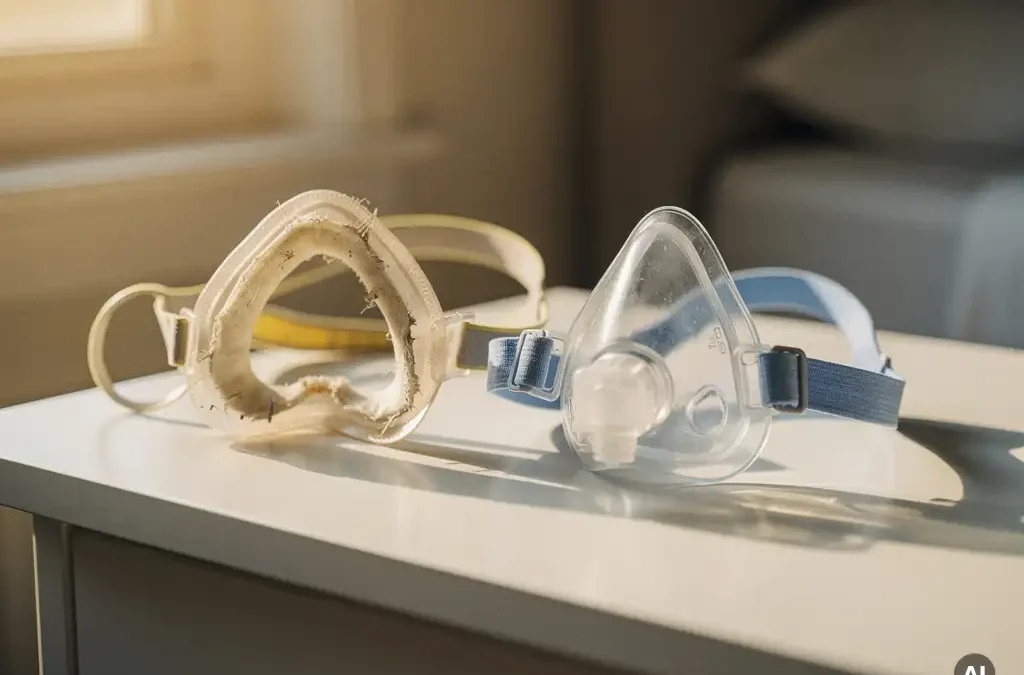
Most CPAP masks should be replaced every three to six months, though the specific components within your mask system may need more frequent attention. The cushion or pillow that contacts your face typically wears out the fastest, while the frame and headgear can last a bit longer. Knowing exactly when to replace each part and what warning signs to watch for makes a real difference in keeping your sleep apnea therapy on track.
How Long Does a CPAP Mask Typically Last?
A full CPAP mask assembly generally lasts three to six months before performance starts to decline noticeably. However, the lifespan varies by component. Mask cushions and nasal pillows tend to wear out within one to three months, while the mask frame can last up to three months, and headgear straps may hold up for around six months before losing elasticity.
The material used in most CPAP mask cushions is silicone, which is durable but not immune to breakdown. Skin oils, facial moisturizers, and repeated cleaning gradually degrade the silicone, causing it to stiffen, crack, or lose its ability to form a proper seal. The more consistently you use your mask, the faster this process happens. A nightly user will see wear much sooner than someone using their device only a few nights per week.
Manufacturers and respiratory therapists typically recommend following replacement schedules based on usage rather than waiting until the mask visibly fails. By that point, your therapy has likely already been compromised for some time.
What Are the Signs Your CPAP Mask Needs Replacing?
The most common signs that your CPAP mask needs replacing include air leaks around the seal, skin irritation or pressure sores, increased noise during use, discoloration or visible cracking of the cushion, and difficulty keeping the mask in place even after adjusting the headgear. Any of these signals means it is time to replace the affected component.
Air leaks are one of the clearest indicators. If you are waking up with dry eyes, a dry mouth, or noticing that your machine seems to be working harder than usual, a failing seal is often the cause. You might also notice that you are tightening your headgear more than you used to just to stop the leaking. This is a sign that the cushion has lost its shape and flexibility rather than a sign that you need to adjust the fit.
Skin irritation and red marks that persist long after you remove your mask each morning are another warning sign. Fresh, pliable cushion material conforms gently to your face. A worn cushion becomes rigid and can create pressure points that cause discomfort, redness, and in some cases, skin breakdown over time.
Discoloration and yellowing of the silicone, along with a persistent odor that does not go away with regular cleaning, are also reliable signs that the material has degraded and the mask is due for replacement.
Can a Worn CPAP Mask Affect Your Therapy Results?
Yes, a worn CPAP mask can significantly affect your therapy results. When a mask no longer seals properly, pressurized air escapes rather than being delivered consistently to your airway. This reduces the therapeutic pressure your machine is working to maintain, meaning your sleep apnea events may go untreated even though your device is running all night.
Your CPAP machine tracks data including leak rates, apnea-hypopnea index scores, and pressure delivery. If your mask is worn, those numbers will reflect it. Many modern machines flag high leak events in their nightly reports, which your respiratory therapist can review during follow-up appointments. Persistent high leak rates are one of the most common reasons CPAP therapy feels ineffective despite consistent use.
Beyond the data, the practical impact is real. Poor mask seal leads to fragmented sleep, increased snoring, dry mouth, and daytime fatigue. These are the exact symptoms CPAP therapy is designed to eliminate. If your symptoms have crept back after a period of feeling better, a worn mask is one of the first things worth checking before assuming your pressure settings need adjustment.
Does Insurance or Alberta Health Cover CPAP Mask Replacements?
In Alberta, CPAP mask replacements are not covered under Alberta Health Services as a standard benefit for most adults. However, many private insurance plans, employer group benefits, and some government assistance programs do provide coverage for CPAP supplies, including mask replacements, on a scheduled basis. Coverage varies widely depending on your specific plan.
It is worth contacting your private insurer directly to ask about your CPAP supply benefit. Many plans cover mask components up to a set dollar amount per year or on a defined replacement schedule. Some plans require a valid prescription or documentation from a physician or respiratory therapist to process the claim, so keeping your paperwork current is important.
For Albertans who qualify under the Assured Income for the Severely Handicapped (AISH) program or other provincial assistance programs, there may be provisions for respiratory equipment. Speaking with a respiratory therapist at your clinic is a practical first step, as they can often guide you through the documentation needed to maximize your coverage.
How Should You Clean Your CPAP Mask to Extend Its Life?
To extend your CPAP mask’s lifespan, clean the cushion daily with mild, fragrance-free soap and warm water, then allow it to air dry completely away from direct sunlight. Avoid alcohol-based cleaners, antibacterial soaps, and scented products, as these break down silicone faster and can cause skin irritation.
A simple daily routine makes a meaningful difference. Washing the cushion each morning removes skin oils and residue before they have a chance to degrade the material. Rinse thoroughly, since soap residue left on the cushion can also irritate skin and break down the silicone over time.
The mask frame and headgear should be washed at least once a week using the same mild soap approach. Headgear straps can be hand-washed and laid flat to dry. Avoid putting headgear in a washing machine or dryer, as the heat and agitation break down the elastic fibers that keep the fit secure.
Applying facial moisturizers or lotions immediately before putting on your mask is one of the fastest ways to shorten cushion life. If you use moisturizer as part of your nightly routine, apply it well in advance and allow it to absorb fully before fitting your mask.
Where Can You Get a CPAP Mask Replaced in Alberta?
In Alberta, you can get a CPAP mask replaced through a licensed home care and respiratory clinic, your referring physician’s office, or directly through a supplier that carries CPAP equipment. Replacement masks and components are also available online, though purchasing through a clinic ensures you get the right fit and proper guidance on setup.
At Dream Sleep Respiratory, we carry a range of CPAP masks and replacement components across our locations in Calgary, Edmonton, Red Deer, Canmore, Cochrane, Olds, and Lethbridge. Our respiratory therapists can assess your current mask fit, recommend the right replacement, and make adjustments to ensure your therapy continues without interruption. If you are unsure whether your mask needs replacing or just a fit adjustment, a quick appointment with one of our team members can save you a lot of guesswork.
If you would like to explore mask options or check whether your current setup is still performing well, you can find your CPAP mask fit using our online tool. Getting the right fit from the start is one of the best ways to protect both your comfort and your long-term therapy results.
Frequently Asked Questions
Can I mix and match components from different CPAP mask brands?
Mixing components from different manufacturers is generally not recommended, as mask systems are engineered to work together as a unit. Cushions, frames, and headgear are designed with specific tolerances, and using mismatched parts can compromise the seal, alter pressure delivery, and void any warranty on your equipment. If you need to replace just one component, your best option is to source the exact replacement part from the same brand and model line.
How do I know if my mask just needs a fit adjustment versus a full replacement?
A good rule of thumb is to start by checking whether the issue appeared gradually over time or suddenly after a recent change. If your mask was sealing well for months and has slowly started leaking despite no changes to your sleep position or weight, wear and material degradation are the likely culprits and replacement is the right call. If the issue appeared suddenly, a fit adjustment or headgear re-tightening may resolve it — a respiratory therapist can help you distinguish between the two during a quick appointment.
What happens if I keep using a worn CPAP mask instead of replacing it?
Continuing to use a worn mask means your therapy is likely being undermined every night, even if your machine appears to be running normally. Undetected air leaks reduce the effective pressure reaching your airway, allowing apnea events to continue untreated, which can contribute to daytime fatigue, cardiovascular strain, and other health consequences associated with untreated sleep apnea. Beyond the health impact, overcompensating by overtightening your headgear to stop leaks can cause skin breakdown and pressure sores that make mask use increasingly uncomfortable.
Are there any mask materials that last longer than standard silicone?
Some manufacturers offer cushions made from memory foam or gel-based materials, which some users find more comfortable and report slightly different wear patterns compared to standard silicone. However, silicone remains the most widely used material because of its durability, ease of cleaning, and hypoallergenic properties for most users. Regardless of material, consistent daily cleaning and avoiding oil-based facial products before masking up will have the greatest impact on extending cushion life across all material types.
Is it normal to need a different mask style as my therapy progresses?
Yes, it is quite common for CPAP users to transition to a different mask style over time as their comfort preferences evolve or their prescribed pressure settings change. For example, users who start on a full face mask may find they can switch to a nasal mask or nasal pillow system once they adapt to therapy and learn to breathe through their nose consistently. If your current mask style is causing ongoing discomfort or compliance issues, speaking with a respiratory therapist about trialing a different style is a worthwhile step rather than assuming CPAP therapy simply is not working for you.
How do I track when each component of my mask is due for replacement?
A simple and effective approach is to note the date you installed each component — cushion, frame, and headgear — directly on your phone calendar or a small label on your equipment case, then set reminders at the recommended replacement intervals. Many CPAP supply clinics and manufacturers also offer auto-ship programs or replacement reminders based on your setup date, which removes the guesswork entirely. Keeping a brief log also helps your respiratory therapist identify whether mask wear could be contributing to any changes in your therapy data during follow-up reviews.
Can children or people with non-standard facial features get properly fitted CPAP masks?
Yes, there are CPAP masks specifically designed for pediatric users, as well as a growing range of masks engineered for a wider variety of facial structures, including smaller faces, flat nasal bridges, and facial hair. Getting a proper fitting assessment from a respiratory therapist is especially important in these cases, as standard sizing charts may not account for unique anatomical differences. At clinics like Dream Sleep Respiratory, therapists can assess your facial profile in person or guide you through an online fit tool to identify the mask styles and sizes most likely to perform well for your specific needs.