
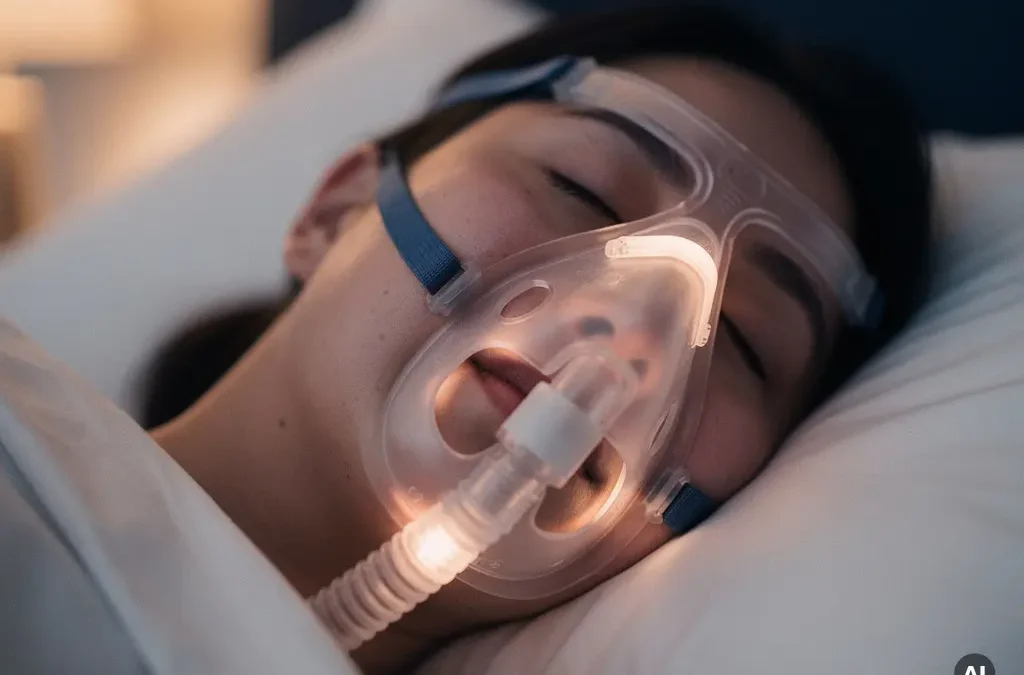
Air escaping around your nose and cheeks during CPAP therapy is almost always caused by a poor mask seal. This typically happens when the mask does not fit your face correctly, has worn-out cushions, or shifts position while you sleep. The good news is that most CPAP mask leaks are fixable with a few targeted adjustments.
A leaking CPAP mask is one of the most common complaints among sleep apnea patients, and it can quietly undermine the therapy you are working hard to maintain. Below, we answer the most common questions about CPAP air leaks so you can get back to effective, comfortable treatment.
What causes air to leak around a CPAP mask?
Air leaks around a CPAP mask are caused by a breakdown in the seal between the mask cushion and your skin. The most common culprits are an incorrect mask size, a worn or hardened cushion, straps that are too loose or too tight, and facial features that make a standard mask shape a poor match for your face.
Skin oils and moisturizers can also degrade the silicone cushion over time, making it less pliable and reducing its ability to conform to the contours of your nose and cheeks. Facial hair is another frequent cause of air leaking around the nose, since even a short beard or stubble creates small gaps that prevent a tight seal.
Mask design matters too. Not every mask style suits every face. A nasal mask that works well for one person may sit awkwardly on someone with a differently shaped nose bridge, allowing air to escape along the sides. If the mask was never properly fitted to begin with, leaks are almost inevitable.
Is a small CPAP mask leak harmful to your therapy?
A small, occasional CPAP mask leak is not always immediately harmful, but a persistent leak does reduce the effectiveness of your therapy. When air escapes around your nose or cheeks instead of being delivered through your airway, the pressure your machine is set to deliver drops, meaning your sleep apnea events may not be adequately controlled.
Most modern CPAP machines measure leak rate automatically and will flag a high leak in your therapy data. If your device consistently reports a large leak, it is a reliable sign that your therapy is being compromised. Beyond reduced effectiveness, air leaking toward your eyes can cause dryness and irritation, and the noise of escaping air can disrupt both your sleep and your partner’s.
Even leaks that feel minor deserve attention. Over time, they tend to worsen as cushions continue to degrade and the habit of overtightening straps to compensate creates pressure points and discomfort.
Why does my CPAP mask leak only at night while I sleep?
Your CPAP mask may seal well when you put it on but leak during the night because your face and jaw relax as you fall into deeper sleep. Muscle tone decreases during sleep, which can cause your jaw to drop, your mouth to open, or your head to shift into a position that breaks the mask seal around your nose and cheeks.
Sleeping position plays a significant role. A mask that seals perfectly when you lie on your back may gap open when you roll onto your side, because the pillow pushes against the mask frame and distorts the cushion. This is a particularly common cause of air leaking around the cheeks.
Pressure changes throughout the night also contribute. If your machine uses auto-adjusting pressure (APAP), the pressure may rise in response to detected apnea events, and that higher pressure can force air through gaps that held at lower settings. Identifying when during the night the leak occurs and in which sleeping position helps narrow down the cause quickly.
How do you fix a leaking CPAP mask around the nose and cheeks?
Fixing a CPAP mask leak around the nose and cheeks starts with identifying whether the problem is fit, wear, or positioning. Most leaks can be resolved by replacing the cushion, adjusting strap tension, switching to a better-matched mask style, or changing your sleep position habits.
Check and replace your mask cushion
Cushions are the most frequently overlooked cause of leaks. They should be replaced every one to three months depending on how often you clean them and how your skin interacts with the silicone. A cushion that feels stiff, looks discolored, or has visible cracks will not seal properly no matter how tightly you adjust the straps. Wash your cushion daily with mild soap and water to extend its life and maintain its pliability.
Adjust strap tension correctly
Counterintuitively, overtightening your headgear is a common cause of leaks. Straps that are too tight distort the cushion shape and create pressure points that push the mask away from your face in other areas. The headgear should be snug enough that you can slide two fingers underneath the straps. If you are regularly tightening your mask to stop leaks, the cushion or mask size is likely the real problem.
Try a different mask style or size
If adjustments do not resolve the leak, the mask style may simply not suit your facial anatomy. Nasal pillow masks, nasal masks, and full face masks each seal differently and suit different face shapes. A CPAP mask fitting with a trained respiratory therapist can identify which mask style and size creates the most reliable seal for your specific features, saving you time and frustration.
When should you see a sleep specialist about your CPAP leak?
You should see a sleep specialist about your CPAP leak if it persists after you have replaced your cushion and adjusted your headgear, if your machine’s therapy data consistently shows a high leak rate, or if you are waking up with dry eyes, a sore face, or feeling unrefreshed despite using your device every night.
These signs suggest that air leaking around your nose or cheeks is actively undermining your treatment. A respiratory therapist can review your therapy data, assess your current mask fit, and recommend a better-matched mask or pressure adjustment. This is not a minor inconvenience to push through. Poorly managed leaks mean your sleep apnea is not being treated as effectively as it should be.
At Dream Sleep Respiratory, we work with patients across Alberta to troubleshoot exactly these kinds of CPAP challenges. Whether you are newly diagnosed or have been using CPAP for years, our team can help you get a seal that holds through the night so your therapy actually delivers the rest you need.
Frequently Asked Questions
Can I use CPAP mask liners or pads to help stop leaks around my nose and cheeks?
Yes, CPAP mask liners are a practical and affordable option worth trying if you are dealing with persistent leaks. These thin fabric or gel pads sit between the silicone cushion and your skin, improving the seal and reducing skin irritation at the same time. They are particularly helpful for people with oily skin, prominent facial features, or mild facial hair that prevents a clean silicone-to-skin contact. Liners are not a permanent fix for a poorly fitted or worn-out mask, but they can meaningfully reduce leak rate while you work toward a better long-term solution.
How do I know if my CPAP leak rate is actually too high, and where do I find that data?
Most modern CPAP and APAP machines record leak rate data nightly, and you can typically access it through the device’s built-in display, a companion app (such as ResMed’s myAir or Philips DreamMapper), or an SD card report reviewed by your care provider. A leak rate under 24 liters per minute is generally considered acceptable by most manufacturers, though your respiratory therapist may set a tighter threshold depending on your prescribed pressure. If your nightly reports consistently show leak rates above that range, or if the app flags it with a low therapy score, it is time to take action rather than wait.
What is the best CPAP mask style for people who are side sleepers and experience cheek leaks?
Side sleepers most commonly benefit from nasal pillow masks or low-profile nasal masks, because these styles have a smaller, more minimal frame that is less likely to be displaced by pillow pressure. Full face masks tend to have a larger surface area that catches the pillow and torques the seal when you roll onto your side. CPAP-specific pillows with cutouts designed to accommodate the mask frame are also a worthwhile investment, as they reduce the physical interference between your pillow and the mask without requiring you to change your natural sleeping position.
Could my CPAP pressure setting be contributing to my mask leaks?
Yes, pressure that is set too high for your current mask and cushion combination can force air through small gaps that would otherwise hold at a lower setting. This is especially relevant if your pressure has been increased over time or if you use an APAP machine that ramps up pressure in response to detected events. Conversely, pressure that is too low may cause you to breathe through your mouth, leading to mouth leaks if you use a nasal mask. If you suspect your pressure setting is part of the problem, speak with your respiratory therapist before adjusting it yourself, as changes should be guided by your therapy data.
How often should I replace my entire CPAP mask versus just the cushion?
The cushion is the component that wears out fastest and should be replaced every one to three months, as outlined in the post. The mask frame and headgear typically last longer — around six months for headgear and up to a year for the frame — but should be replaced sooner if the plastic shows cracking, the clips no longer hold firmly, or the fabric straps have lost their elasticity. Most provincial health coverage plans and private insurance policies in Canada cover mask component replacements on a scheduled basis, so check your benefits before paying out of pocket.
Is it normal to experience more CPAP mask leaks after losing or gaining weight?
Absolutely, and this is a commonly overlooked trigger for sudden changes in mask fit. Significant weight loss or gain alters the contours of your face, including the nose bridge, cheeks, and jaw, which can cause a previously well-fitting mask to no longer seal correctly. If your leak problems started around the same time as a noticeable change in your weight, a mask refitting appointment is the most efficient next step rather than continuing to adjust a mask that no longer matches your facial anatomy.
What should I do if I wake up in the middle of the night because of a loud leak but I am too tired to fix it properly?
In the short term, gently repositioning the mask with your fingertips — pressing the cushion lightly against your face and re-seating it — often restores the seal without requiring you to fully adjust the headgear in the dark. Keeping a small mirror and a bedside light within reach can help you make quick corrections without fully waking up. However, if you are doing this regularly, it is a clear signal that something more fundamental is wrong with your mask fit or cushion condition, and addressing the root cause during waking hours will save you far more disrupted sleep in the long run.