
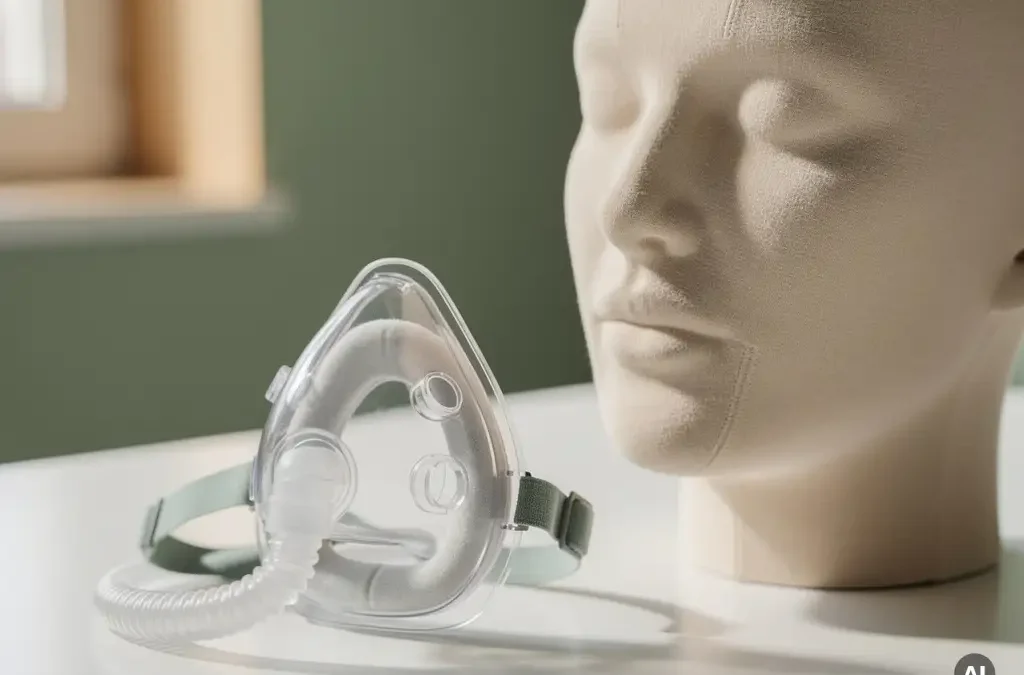
Yes, the shape of your face can absolutely cause CPAP mask leaks. Facial structure, including the width of your nose, the prominence of your cheekbones, the depth of your chin, and the distance between your nose and upper lip, directly affects how well a mask cushion can form a complete seal. Finding the right mask style and size for your specific facial anatomy is one of the most effective ways to eliminate leaks and get the full benefit of your therapy.
Below, we answer the most common questions about face shape, CPAP mask fit, and what you can do to stop leaks for good.
Which Facial Features Most Commonly Cause CPAP Mask Leaks?
Several facial features frequently interfere with a proper CPAP mask seal. A narrow or wide nose bridge, prominent cheekbones, a recessed chin, deep facial creases, a short distance between the nose and upper lip, and facial hair are the most common culprits. Each of these features can prevent the mask cushion from lying flat and creating airtight contact with your skin.
A narrow nose bridge, for example, means a nasal or full-face mask may gap at the sides where the cushion cannot conform to the contour. Prominent cheekbones can push the mask away from the face, while a recessed or small chin creates challenges for full-face masks that need a secure lower anchor point. Deep nasolabial folds, the creases running from the sides of the nose to the corners of the mouth, are a particularly common source of leaks because air finds those grooves and escapes through them.
Facial hair adds another layer of complexity. Even a few days of stubble can break the cushion seal, since the silicone or gel material cannot compress against hair the same way it does against smooth skin.
How Does a CPAP Mask Leak Affect Sleep Apnea Treatment?
A CPAP mask leak reduces the effectiveness of sleep apnea treatment by allowing pressurized air to escape before it can maintain the open airway your therapy depends on. When air leaks out, the pressure delivered to your airway drops below the prescribed therapeutic level, meaning apnea events may continue even while you are using your machine.
Beyond the direct impact on airway pressure, leaks cause several secondary problems. Air escaping near the eyes can cause dryness and irritation, disrupting sleep quality. The noise of a leak, often a hissing or whistling sound, can wake you or your partner. Many modern CPAP machines detect leaks and automatically increase pressure to compensate, which can itself cause discomfort and arousals.
Consistent leaks also mean your therapy data is unreliable. If your device is recording leak events throughout the night, your care team cannot accurately assess how well your treatment is working. Addressing a face-related leak is not just about comfort, it is essential for your therapy to actually do its job.
What CPAP Mask Styles Work Best for Different Face Shapes?
Different CPAP mask styles suit different facial structures, and matching the two is the foundation of a leak-free fit. The three main mask types, nasal masks, nasal pillow masks, and full-face masks, each interact with facial anatomy in distinct ways.
Nasal Masks
Nasal masks cover the nose from the bridge down to the upper lip. They work well for people with average facial proportions and those who move during sleep. However, they can struggle on very narrow or very wide nose bridges, and they are not suitable for people who breathe through their mouth.
Nasal Pillow Masks
Nasal pillow masks insert small cushioned tips directly into the nostrils rather than covering the nose. This minimal contact design makes them an excellent choice for people with prominent cheekbones, deep facial creases, or facial hair, since there is far less surface area that needs to seal. They also suit people who feel claustrophobic in larger masks. The limitation is that they can be uncomfortable at higher pressure settings and do not work for everyone’s nostril shape.
Full-Face Masks
Full-face masks cover both the nose and mouth, making them the go-to option for mouth breathers. They require a larger sealing surface, which means more opportunity for fit issues related to cheekbone width, chin depth, and facial creases. People with a smaller face or a pronounced overbite often find full-face masks harder to fit well.
How Can You Tell If Your Mask Is the Wrong Size or Style?
The clearest signs that your CPAP mask is the wrong size or style are persistent leaks despite tightening the straps, red marks or pressure sores on your face, and ongoing therapy data showing high leak rates. If you are waking up with dry eyes, a dry mouth, or a sore nose bridge, your mask fit is almost certainly the problem.
A mask that is too large will gap and shift during the night, especially when you change sleeping positions. A mask that is too small will press too hard into the skin, causing discomfort and paradoxically creating leak points where the cushion distorts under pressure. If you find yourself tightening the headgear straps further and further to stop leaks, that is a strong signal the mask itself is not the right fit for your face, not that you simply need to pull harder.
Style mismatch shows up differently. If you consistently wake with a dry mouth while using a nasal mask, you are likely breathing through your mouth overnight and need a full-face option. If you feel pressure or discomfort across your cheeks with a full-face mask, a nasal pillow design may suit your facial structure better.
Can CPAP Mask Cushions and Fit Adjustments Fix a Face-Related Leak?
Yes, in many cases replacing or upgrading the mask cushion and making targeted fit adjustments can resolve a face-related CPAP leak without needing an entirely new mask. Cushions wear out over time and lose their ability to conform and seal, replacing the cushion every one to three months is a standard recommendation for this reason.
For people with deep facial creases or an irregular skin surface, specialty cushions made from memory foam or softer gel materials can conform more closely to the contours of the face than standard silicone. Some masks offer multiple cushion sizes within the same frame, so switching from a medium to a small cushion, or trying a cushion with a different profile, can make a significant difference without replacing the entire mask.
Headgear adjustments also matter. Straps that are too loose allow the mask to shift, while straps that are too tight distort the cushion shape and actually create gaps. The goal is a snug fit that does not leave deep red lines on the skin after removal.
That said, cushion swaps and strap adjustments have limits. If the mask style is fundamentally mismatched to your facial structure, no amount of tightening or cushion changing will produce a reliable seal. Working with a respiratory therapist to assess your face shape and trial different mask styles is the most efficient path to a lasting solution. Our CPAP mask fitting tool is a great starting point to identify which mask styles are most likely to suit your facial anatomy before you commit to a new piece of equipment.
Frequently Asked Questions
How do I know which CPAP mask to try first if I've never been fitted before?
Start by identifying a few key features of your face: do you have prominent cheekbones, deep facial creases, a recessed chin, or facial hair? If you breathe through your mouth, a full-face mask is typically your starting point. If you have prominent cheekbones or deep creases, a nasal pillow mask is often the easiest style to seal. Using a mask fitting tool, like the one linked above, can help you narrow down compatible styles based on your facial anatomy before you spend money on equipment that may not work for you.
What if I've tried multiple masks and still can't stop the leaks?
If you’ve cycled through several masks without success, it’s worth scheduling a hands-on fitting session with a respiratory therapist or a CPAP equipment specialist who can assess your face in person. Beyond mask style, factors like your prescribed pressure setting, sleeping position, and even skin moisture can all contribute to persistent leaks. A specialist can review your therapy data, observe how the mask sits on your face, and recommend a combination of mask style, cushion type, and headgear configuration tailored specifically to you.
Does sleeping position affect how much a face-shape-related leak occurs?
Yes, significantly. A mask that seals well when you fall asleep on your back may gap or shift when you roll to your side, especially if your cheekbones or chin press into the pillow and distort the cushion. Side sleepers with prominent facial features often benefit from nasal pillow masks, which have minimal contact points and are less likely to be disrupted by pillow pressure. CPAP-specific pillows with cutouts designed to accommodate the mask can also help maintain a consistent seal throughout the night regardless of position.
Can weight loss or gain change how my CPAP mask fits over time?
Absolutely. Changes in body weight, particularly in the face, can alter the contours of your cheeks, chin, and nose area enough to affect your mask seal. If you’ve recently lost or gained a noticeable amount of weight and your previously well-fitting mask has started leaking, a refitting is warranted. It’s also worth noting that significant weight loss can sometimes change your sleep apnea severity, which may be an opportunity to discuss your overall therapy settings with your care team.
Is it safe to use mask liner products to help with face-related leaks?
Yes, fabric mask liners are a safe and widely used solution for people who struggle with leaks caused by facial creases, oily skin, or skin sensitivity to silicone. These thin fabric layers sit between the cushion and your skin, helping the mask conform more evenly to irregular surface contours while also reducing skin irritation. They are particularly helpful for people with deep nasolabial folds. Keep in mind that liners add a small layer of bulk, so you may need to make minor headgear adjustments after introducing them.
How often should I replace my mask cushion to prevent fit-related leaks?
Most manufacturers and sleep therapy guidelines recommend replacing your mask cushion every one to three months, depending on how frequently you use it and how well you clean it. Silicone and gel cushions degrade with repeated exposure to skin oils, cleaning solutions, and compression, losing their ability to form a tight, conforming seal over time. If you notice your leak rate gradually increasing even though nothing else has changed, a worn cushion is often the culprit and is the least expensive fix to try first.
Can a dentist or orthodontic appliance interfere with CPAP mask fit?
Yes, oral appliances such as night guards, mandibular advancement devices, or retainers can change the position of your jaw and lips while you sleep, which directly affects how a full-face or nasal mask seals around the lower portion of your face. If you use both a CPAP and an oral appliance, discuss this with both your sleep specialist and your dentist, as there are combination therapy devices and mask styles specifically designed to accommodate oral appliances. Nasal pillow masks are often the most compatible option in these situations since they don’t rely on a seal around the mouth area.