
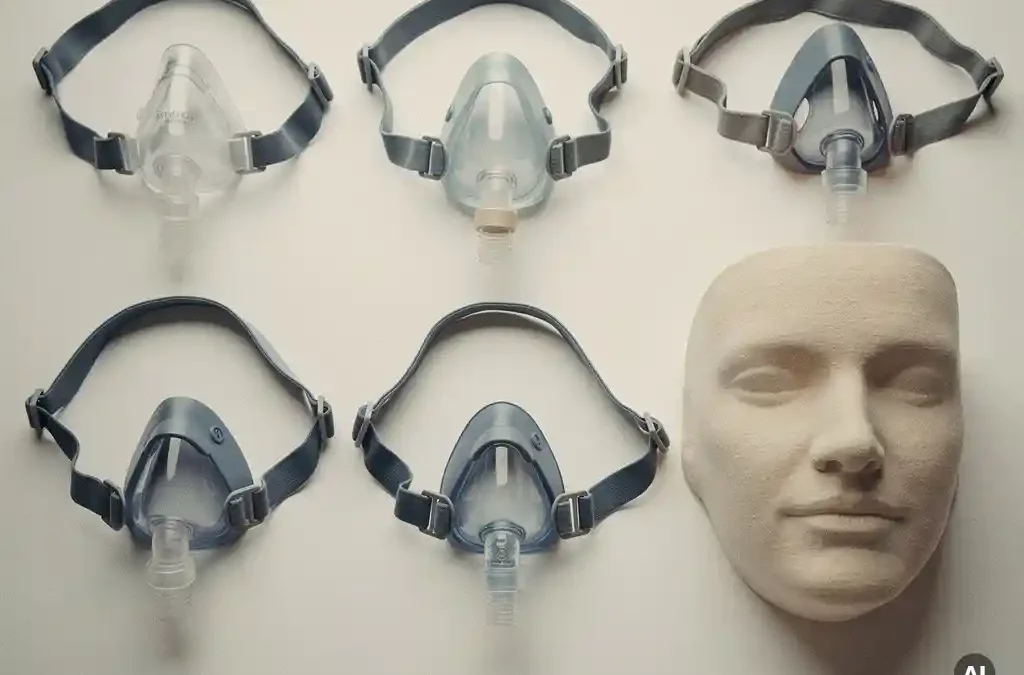
No, standard CPAP mask sizes are not suitable for every face. CPAP masks come in small, medium, and large sizing options, but facial anatomy varies significantly from person to person, meaning a standard size may not seal properly or feel comfortable for everyone. Understanding your options is the first step toward effective, comfortable CPAP therapy.
Below, we answer the most common questions about CPAP mask sizes, types, and fit so you can get the most out of your sleep apnea treatment.
Why Do CPAP Masks Come in Multiple Sizes?
CPAP masks come in multiple sizes because human faces vary widely in shape, width, and structure. A mask that seals correctly on one person may gap, leak, or press uncomfortably on another. Proper sizing ensures an airtight seal, which is essential for CPAP therapy to deliver consistent air pressure and effectively treat sleep apnea.
Beyond simple width, manufacturers account for differences in nose bridge height, cheekbone prominence, jaw shape, and the distance between the nose and upper lip. These variables mean that even two people who wear the same clothing size or hat size may need completely different CPAP mask sizes. Getting the sizing right directly affects how well your therapy works. Air leaks caused by poor fit reduce the pressure delivered to your airway, which can leave sleep apnea symptoms unresolved despite consistent use.
What Are the Different Types of CPAP Masks Available?
There are three main types of CPAP masks: nasal pillow masks, nasal masks, and full face masks. Each type is designed for different breathing patterns, facial structures, and comfort preferences, and each comes in its own range of sizes.
- Nasal pillow masks sit at the base of the nostrils and are the smallest, most lightweight option. They work well for people who feel claustrophobic with larger masks or who wear glasses and read before bed.
- Nasal masks cover the nose from the bridge down to the upper lip. They are a popular middle-ground option, offering a secure seal while remaining less bulky than full face masks. They suit most sleeping positions well.
- Full face masks cover both the nose and mouth, making them the right choice for people who breathe through their mouths during sleep or who experience nasal congestion frequently.
Within each type, manufacturers typically offer small, medium, and large sizing, and some brands include extra-small or wide variants. Choosing the right type is just as important as choosing the right size, since even a perfectly sized nasal pillow mask will not work for a dedicated mouth breather.
How Do You Know If Your CPAP Mask Fits Correctly?
A correctly fitting CPAP mask creates a consistent seal without requiring tight headgear straps, stays in place throughout the night, and does not leave red marks or pressure sores on your skin. When your mask fits properly, you should hear little to no air escaping from the edges during use.
A few practical signs of a good fit include:
- The mask seals fully when you lie in your typical sleeping position, not just when sitting upright
- The headgear feels secure but not tight enough to cause discomfort or headaches
- You do not need to over-tighten the straps to stop leaks
- Your skin shows no significant redness or indentation after removing the mask in the morning
- Your CPAP device does not report high leak rates in its data or app
Many modern CPAP machines track leak data automatically. If your device is consistently flagging high leak rates overnight, that is a strong signal that your mask sizing or type may need to be reassessed.
What Happens If a Standard CPAP Mask Size Does Not Fit?
If a standard CPAP mask size does not fit correctly, therapy effectiveness drops significantly. Air leaks reduce the pressure reaching your airway, meaning your sleep apnea may go undertreated even though you are technically using your device. Poor fit also causes discomfort that makes it harder to stay consistent with therapy.
Common consequences of a poorly fitting sleep apnea mask include:
- Persistent air leaks that dry out your eyes or mouth overnight
- Skin irritation, pressure sores, or marks on the nose bridge or cheeks
- Mask displacement during sleep, especially for active sleepers
- Reduced motivation to use the device consistently
- Continued daytime fatigue because apnea events are not being adequately controlled
Inconsistent CPAP use due to discomfort is one of the most common barriers to successful sleep apnea treatment. Addressing the fit issue directly is almost always more effective than simply pushing through discomfort or abandoning therapy altogether.
When Should You Consider a Custom-Fit or Specialty CPAP Mask?
You should consider a custom-fit or specialty CPAP mask when standard sizing options consistently fail to provide a comfortable, leak-free seal. This is particularly relevant for people with facial features that fall outside typical sizing ranges, such as a very narrow or wide nose bridge, prominent cheekbones, a short distance between the nose and upper lip, or significant facial hair.
Specialty masks are also worth exploring in situations such as:
- Sleeping exclusively on your side or stomach, where standard masks shift or compress against the pillow
- Having had facial surgery or scarring that affects how a mask sits
- Wearing supplemental oxygen alongside CPAP therapy
- Experiencing severe claustrophobia with standard mask styles
Some manufacturers now offer sizing kits or digital fitting tools that use measurements or even a photo to match you with the closest available size before you commit to a mask. Our team uses the FormFit mask fitting tool to help patients find the right match based on their individual facial measurements, removing much of the guesswork from the process.
How Can a Sleep Clinic Help You Find the Right CPAP Mask?
A sleep clinic can help you find the right CPAP mask by providing hands-on fitting expertise, access to multiple mask styles and sizes, and ongoing follow-up to refine your setup over time. Rather than relying on trial and error at home, working with trained respiratory therapists ensures your mask is matched to your specific facial structure and therapy needs from the start.
At Dream Sleep Respiratory, we take a personalized approach to CPAP mask sizing. Our respiratory therapists assess your facial anatomy, discuss your sleeping habits and any comfort concerns, and match you with the most appropriate mask type and size. We also provide follow-up appointments to adjust your setup as needed, because fit requirements can change over time, particularly if your weight changes or if you switch sleeping positions.
Getting the right CPAP mask fit is not a one-time event. It is an ongoing part of successful sleep apnea management, and having a knowledgeable team in your corner makes that process significantly easier. If you have been struggling with your current mask or are just starting CPAP therapy, reaching out to a sleep clinic is one of the most practical steps you can take toward consistent, effective treatment.
Frequently Asked Questions
How often should I replace my CPAP mask to maintain a good fit?
Most CPAP mask components have a recommended replacement schedule: cushions and pillows should typically be replaced every 1–3 months, while mask frames and headgear are generally replaced every 6–12 months. Over time, silicone cushions lose their elasticity and conformability, which can cause a previously well-fitting mask to start leaking even if nothing else has changed. Your equipment supplier or sleep clinic can help you set up a replacement schedule based on your specific mask model and usage habits.
Can losing or gaining weight affect how my CPAP mask fits?
Yes, changes in body weight — even moderate ones — can noticeably alter your facial structure, particularly around the cheeks, nose, and jaw, which directly impacts how your mask seals. If you have recently lost or gained weight and are noticing increased leaks, discomfort, or red marks that were not there before, it is a good idea to schedule a re-fitting with your sleep clinic. In some cases, a different size or even a different mask style may serve you better after a significant weight change.
What should I do if my CPAP mask fits well during the fitting but leaks when I actually sleep?
This is a very common issue because mask fittings are typically done while sitting upright, but your facial muscles relax and your head position shifts significantly once you are lying down and asleep. Try adjusting your mask while lying in your actual sleeping position rather than while seated, and test the seal in that position before settling in for the night. If leaks persist, inform your sleep clinic — they may recommend a different cushion type, a mask with more flexible cushion geometry, or a positional aid to keep your head in a more consistent alignment.
Is it possible to be fitted for a CPAP mask if I have a beard or significant facial hair?
Facial hair is one of the most common fit challenges with standard CPAP masks, since most silicone cushions rely on direct skin contact to create a seal. Nasal pillow masks tend to work best for people with beards because they make minimal contact with the face, sealing at the nostril openings rather than across the cheeks or upper lip. Some specialty mask models also feature softer, more conformable cushion materials designed to accommodate light-to-moderate stubble, so it is worth discussing this specifically with your respiratory therapist during your fitting.
How do I know whether I need a nasal mask or a full face mask?
The most reliable indicator is whether you breathe through your mouth during sleep — if you do, a nasal-only mask will allow pressurized air to escape through your open mouth, making therapy ineffective. A simple way to check is to ask a partner if they have observed mouth breathing, or to pay attention to whether you wake up with a dry mouth or throat, which is a strong sign of nighttime mouth breathing. Your sleep study data can also provide clues, and a respiratory therapist can help you interpret that information and recommend the most appropriate mask type for your breathing pattern.
What are the most common mistakes people make when adjusting their CPAP mask straps?
The most frequent mistake is over-tightening the headgear straps in an attempt to stop leaks — this approach typically makes the problem worse by distorting the cushion’s shape and creating pressure points rather than a better seal. A properly fitting mask should seal with straps adjusted to a snug but comfortable tension, roughly allowing one or two fingers to slip underneath the strap. If you find yourself constantly tightening straps to control leaks, that is a signal to reassess the mask size or style rather than to keep adding strap tension.
Can children or teenagers use standard adult CPAP masks, or are there pediatric-specific options?
Standard adult CPAP masks are generally not appropriate for children or teenagers, as their facial proportions differ significantly from adults and even small-sized adult masks are typically too large to seal correctly on a child’s face. Several manufacturers produce pediatric-specific CPAP masks designed for smaller facial dimensions and the unique comfort needs of younger patients. If a child or adolescent has been diagnosed with sleep apnea and requires CPAP therapy, working with a sleep clinic that has experience in pediatric sleep medicine is essential to ensure both proper fit and age-appropriate therapy settings.