
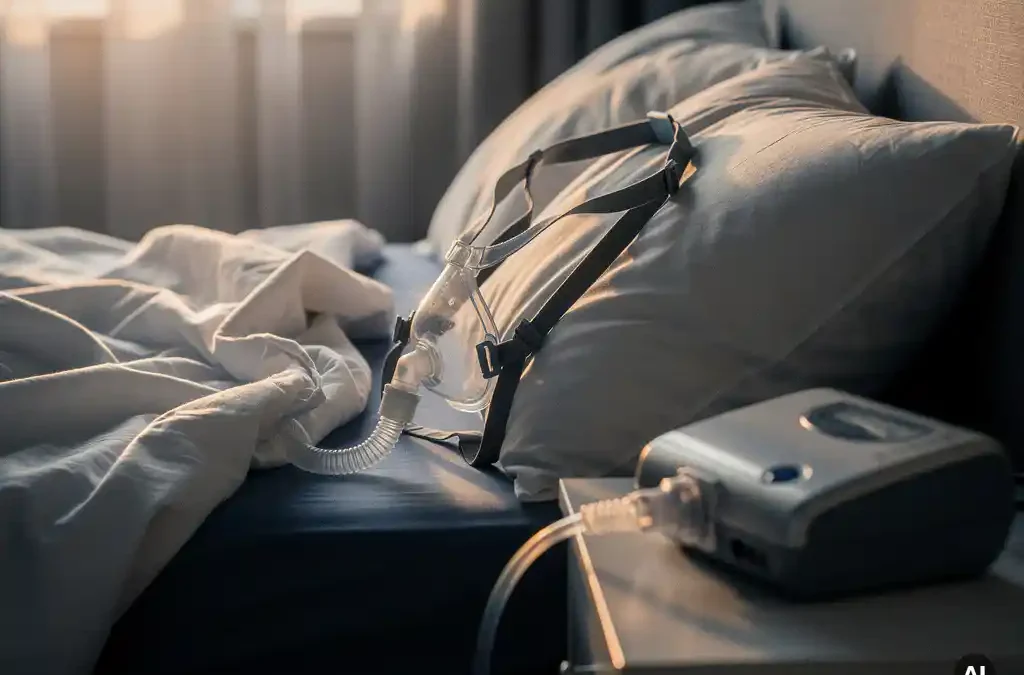
Yes, a poorly fitting CPAP mask can significantly affect your therapy. When your mask does not seal correctly against your face, air escapes before it reaches your airway, reducing the pressure your machine delivers and leaving sleep apnea symptoms unaddressed. Below, we answer the most common questions about CPAP mask fit so you can get the most out of your treatment.
What happens to your therapy when your CPAP mask doesn’t fit properly?
A poorly fitting CPAP mask directly undermines your sleep apnea treatment by allowing pressurized air to leak out rather than flow into your airway. Even small gaps around the seal can drop the delivered pressure below your prescribed level, meaning your airway may still collapse during sleep. The result is disrupted sleep, continued apnea events, and persistent daytime fatigue despite using your machine every night.
Beyond the immediate pressure loss, CPAP mask leaking creates a frustrating cycle. Many patients tighten their headgear to compensate for leaks, which causes skin irritation, pressure sores, and discomfort that makes them less likely to wear the mask consistently. Reduced compliance then compounds the problem, since CPAP therapy only works when it is used regularly throughout the night. A mask that fits well is not just about comfort, it is the foundation of effective therapy.
What are the signs that your CPAP mask fits poorly?
The most common signs of a poor CPAP mask fit include air leaking around the edges of the mask, a hissing sound during the night, red marks or sore spots on your face in the morning, and waking up with a dry mouth or eyes. If you are still snoring, waking frequently, or feeling tired during the day despite using your CPAP, a mask fit issue is one of the first things to investigate.
Some signs are easy to notice immediately, while others build up over time. Watch for these indicators:
- Audible air leaks or whistling sounds from around the mask seal
- Skin redness, irritation, or indentations on your nose, cheeks, or forehead
- Dry or watery eyes caused by air blowing upward toward your face
- Dry mouth, which often signals air is escaping and you are breathing through your mouth
- Headgear that needs constant readjustment throughout the night
- Persistent daytime sleepiness even after a full night of CPAP use
Many CPAP machines record leak data that your care provider can review. If your device shows consistently high leak rates, that is a clear signal your CPAP mask fitting needs attention.
Why does CPAP mask fit change over time?
CPAP mask fit changes over time because the materials that make up your mask gradually degrade with regular use. Silicone cushions and foam padding lose their elasticity and softness, reducing their ability to form a reliable seal against your skin. Most mask cushions need replacing every one to three months, and full mask frames typically last around six months to a year depending on use and care.
Physical changes to your face also play a role. Weight gain or loss can alter the contours of your cheeks, nose, and chin, shifting how the mask sits. Dental work, facial hair growth, and even changes in sleeping position can all affect the seal you get each night. Skin that becomes drier or more sensitive over time may also react differently to mask materials, prompting the need for a different cushion type or size. Regular check-ins with your respiratory care provider help catch these changes before they erode the quality of your therapy.
How do different CPAP mask types affect fit and comfort?
The three main CPAP mask types, full face masks, nasal masks, and nasal pillow masks, each fit differently and suit different breathing habits, facial structures, and pressure settings. The right type for you depends on whether you breathe through your mouth, your prescribed pressure level, and the shape of your face. Choosing the wrong mask type is one of the most common reasons patients struggle with fit and comfort.
Full face masks
Full face masks cover both the nose and mouth and are best suited to mouth breathers or patients prescribed higher pressure settings. They distribute pressure across a larger surface area, which can improve the seal for some users, but they are also more prone to leaking if the fit is not precise because they cover more of the face. They can feel bulky and may not suit patients who move around a lot during sleep.
Nasal masks and nasal pillow masks
Nasal masks cover the nose only and offer a lighter, less intrusive fit than full face options, making them a popular choice for patients who breathe through their nose. Nasal pillow masks go a step further, using small inserts that sit directly at the nostrils rather than covering the nose entirely. They are the most minimal option and work well for active sleepers or those who feel claustrophobic with larger masks. However, both nasal options require consistent nasal breathing. If you tend to open your mouth during sleep, air will escape and your therapy will suffer.
How can you get a better-fitting CPAP mask?
Getting a better-fitting CPAP mask starts with a proper mask fitting assessment, where a trained respiratory therapist matches your mask type and size to your facial measurements and breathing habits. From there, small adjustments to headgear tension, cushion size, or mask style can make a significant difference. Never rely on tightening straps alone to fix a leak, this approach causes discomfort and rarely solves the underlying fit problem.
Here are practical steps to improve your CPAP mask fit:
- Replace worn cushions regularly – most should be swapped every one to three months to maintain a proper seal.
- Clean your mask daily – oil and residue from your skin break down silicone faster and compromise the seal.
- Adjust headgear while lying down – your face changes shape when horizontal, so fitting the mask in your sleeping position gives a more accurate result.
- Try a different cushion size – many masks come in small, medium, and large options, and the wrong size is a common culprit for leaks.
- Consider a different mask style – if you consistently struggle with one type, a different design may suit your face and sleep habits better.
Our team offers CPAP mask fitting support to help you find the right match for your face, pressure needs, and lifestyle, so you can sleep comfortably and get the full benefit of your therapy.
When should you see a specialist about your CPAP mask fit?
You should see a specialist about your CPAP mask fit if you are experiencing persistent leaks, ongoing skin irritation, or continued sleep apnea symptoms despite regular CPAP use. These are signs that self-adjustment is not resolving the problem and that a professional assessment is needed. Do not wait months hoping the issue will resolve on its own, poor mask fit means your therapy is not working as it should, and your health is the priority.
Specific situations that warrant a specialist visit include:
- Your machine’s leak data consistently shows high leak rates
- You have lost or gained weight and your current mask no longer fits the same way
- You are waking with headaches, dry mouth, or feeling unrested despite consistent CPAP use
- You have developed skin sores, redness, or pressure marks that are not improving
- You are avoiding wearing your mask because it is too uncomfortable
A respiratory therapist can review your leak data, assess your facial structure, and guide you through available mask options to find one that works. Getting the fit right is one of the most impactful things you can do to improve the effectiveness of your sleep apnea treatment and your quality of life overall.
Frequently Asked Questions
Can I use CPAP mask liners or padding to improve my mask fit?
Yes, CPAP mask liners and padding can be a helpful supplementary solution for minor fit issues. Fabric liners, for example, sit between the silicone cushion and your skin to reduce irritation and absorb facial oils, which can also improve the seal. However, they are not a substitute for a properly sized and well-maintained mask — if you are relying on liners to compensate for significant leaks, it is time to reassess your mask type or size with a respiratory therapist.
What if I've tried multiple masks and still can't get a good seal?
If you have gone through several mask styles and sizes without finding a reliable seal, the issue may be less about the mask itself and more about factors like facial hair, unique facial contours, or an incorrect pressure setting. Some patients benefit from a custom-fit mask assessment or specialty cushion materials designed for hard-to-fit faces. A respiratory therapist can also check whether your prescribed pressure needs adjustment, since very high or low settings can make sealing more difficult regardless of mask fit.
How does sleeping position affect CPAP mask fit throughout the night?
Sleeping position has a significant impact on how your mask sits and seals during the night. Side sleepers, for example, often experience mask displacement or increased leaking as the mask presses against the pillow and shifts out of position. CPAP-specific pillows with cutouts for the mask can help maintain the seal without compressing the cushion. If you change positions frequently during sleep, a nasal pillow mask is often the most stable option because of its minimal contact with the face.
Is it normal for a brand-new CPAP mask to leak at first?
A small amount of adjustment time is normal with a new mask, but consistent or significant leaking from day one is a sign that the size or style is not right for your face. New silicone cushions can sometimes feel stiff initially and may conform slightly better after a few uses, but they should still form a functional seal from the start. If your new mask is leaking noticeably, contact your respiratory care provider promptly rather than waiting — it is much easier to exchange a mask early than to struggle with a poor fit for weeks.
Can weight changes really make that big a difference to my mask fit?
Even modest weight changes — as little as 10 to 15 pounds — can noticeably alter the contours of your cheeks, chin, and nose, shifting how your mask cushion sits against your face. Weight loss in particular tends to reduce facial fullness, which can create gaps where the seal previously held firm. If you have recently experienced any significant weight change, scheduling a mask refitting appointment is one of the most proactive steps you can take to protect the quality of your therapy.
How do I know if my CPAP leak rate is within an acceptable range?
Most CPAP machines classify leaks as either intentional (built into the mask’s exhalation vent) or unintentional (air escaping from a poor seal). Your device’s app or data report will typically show your unintentional leak rate, and most manufacturers consider anything under 24 liters per minute acceptable, though lower is always better. If your machine or app flags your leak rate as “large” or “out of range,” or if your care provider sees elevated leak data during a review, that is a clear signal to address your mask fit as soon as possible.
What is the best way to clean my CPAP mask to preserve its fit over time?
The best daily cleaning routine is to hand wash your mask cushion and frame with mild, fragrance-free soap and warm water, then allow it to air dry away from direct sunlight, which can degrade silicone. Avoid alcohol-based wipes or harsh cleaning products, as these break down the cushion material faster and shorten its effective lifespan. Consistent daily cleaning not only extends the life of your mask but also prevents the buildup of facial oils and bacteria that can compromise the seal and irritate your skin.