
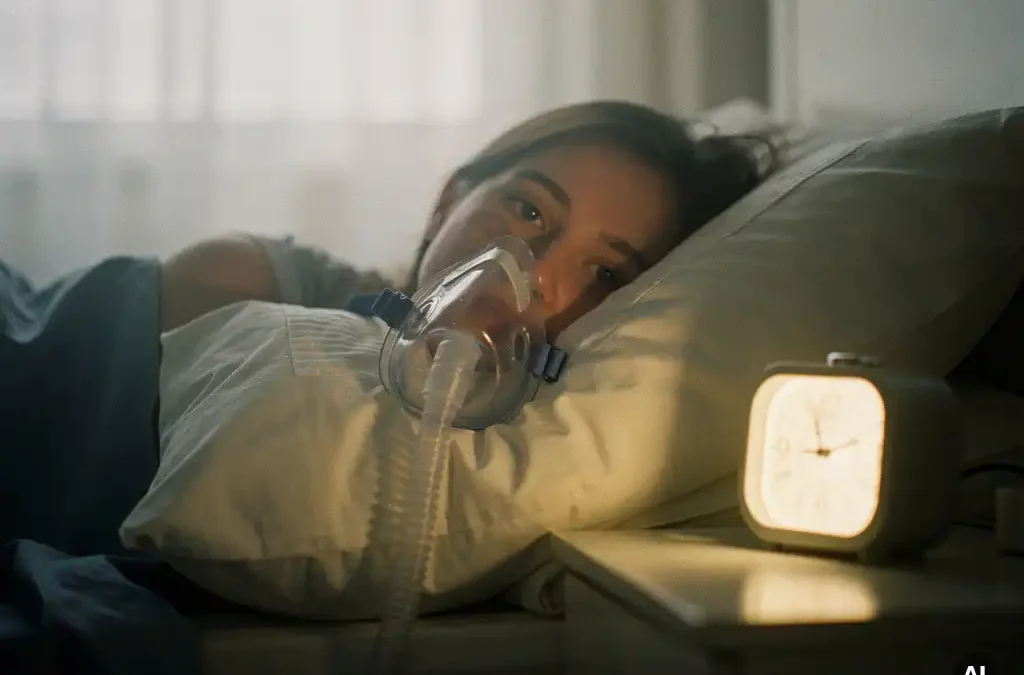
If you are still waking up tired while using CPAP, your therapy may not be working as effectively as it should, even if the machine runs all night. CPAP is a powerful treatment for sleep apnea, but factors like incorrect pressure settings, a poorly fitting mask, or an undiagnosed secondary sleep disorder can all prevent you from getting truly restorative sleep. The questions below break down the most common reasons CPAP fatigue persists and what you can do about it.
What could cause fatigue even when CPAP is running all night?
CPAP not working despite running through the night is more common than most people realize. The machine being on does not automatically mean your airway is being kept open effectively. Residual apnea events, air leaks, pressure mismatches, or even unrelated sleep conditions can all leave you waking up tired on CPAP despite hours of use.
Think of CPAP therapy as a system with several moving parts. If any one component is off, the whole system underperforms. The most frequent culprits include pressure settings that no longer match your current needs, a mask that leaks air throughout the night, mouth breathing that bypasses the therapy entirely, or a secondary condition like insomnia or restless leg syndrome that disrupts your sleep independently of your apnea.
Your CPAP machine likely records data every night. Most modern devices track your AHI (apnea-hypopnea index), mask leak rate, and hours of use. Reviewing this data with a respiratory therapist is one of the fastest ways to pinpoint why your CPAP therapy fatigue is persisting.
How do you know if your CPAP pressure is set correctly?
Your CPAP pressure is set correctly when your recorded AHI consistently stays below five events per hour and you wake feeling rested without headaches or dry mouth. If your pressure is too low, apnea events continue through the night. If it is too high, the forced air can cause discomfort, central apneas, or frequent arousals that fragment your sleep.
Pressure needs can shift over time. Weight changes, nasal congestion, alcohol use, sleeping position, and even seasonal allergies can all affect how much pressure your airway requires on any given night. A fixed-pressure CPAP machine will not automatically adapt to these changes, which is why some patients benefit from switching to an APAP (auto-adjusting PAP) device that responds to your breathing in real time.
If your CPAP data shows an AHI above five, frequent large leaks, or a high number of flow limitation events, your pressure likely needs to be reassessed. This is not something to troubleshoot on your own, a trained respiratory therapist can review your device data and recommend a pressure adjustment or machine upgrade that matches your current physiology.
Can a poor-fitting CPAP mask make you tired the next day?
Yes, a poorly fitting CPAP mask is one of the most common reasons people still feel tired with CPAP. A mask that leaks air reduces the therapeutic pressure reaching your airway, allowing apnea events to continue. Even small leaks can be significant enough to undermine your treatment without triggering an obvious alarm on the machine.
Beyond air leaks, an uncomfortable mask causes its own problems. If the mask presses painfully on your nose, leaves marks on your face, or shifts when you roll over, your brain registers that discomfort and pulls you toward lighter, less restorative sleep stages. You may not fully wake up, but you are not reaching deep sleep either.
Mask fit is also not a one-time decision. Your face shape, weight, and even skin elasticity can change over time, and a mask that fit well two years ago may no longer create a proper seal. There are several mask styles available, nasal pillows, nasal masks, and full-face masks, and the right one depends on how you breathe, your sleep position, and your facial structure. Getting a proper mask fitting from a specialist, rather than guessing on your own, makes a meaningful difference in CPAP effectiveness. You can find your ideal CPAP mask fit through our online fitting tool to get started.
Could another sleep disorder be causing lingering tiredness?
Absolutely. Sleep apnea rarely exists in isolation, and if your CPAP therapy is well-calibrated but you are still exhausted, another sleep disorder may be responsible. Conditions like insomnia, restless leg syndrome, periodic limb movement disorder, and even circadian rhythm disruptions can all cause fragmented, unrefreshing sleep that CPAP cannot address on its own.
Insomnia is particularly common among people with sleep apnea. Years of poor sleep can condition the brain into a state of hyperarousal at bedtime, making it difficult to fall or stay asleep even after the apnea itself is treated. This is sometimes called comorbid insomnia and it requires its own targeted treatment, often cognitive behavioural therapy for insomnia (CBT-I), rather than relying on CPAP alone.
Restless leg syndrome and periodic limb movements are another overlooked cause of CPAP therapy fatigue. These conditions cause involuntary leg movements or uncomfortable sensations that repeatedly pull you out of deeper sleep stages. Because CPAP does not treat limb movements, your sleep can remain fragmented even when your breathing is well-controlled. A Level 3 sleep study can help identify whether additional sleep-disordered conditions are contributing to your ongoing tiredness, giving your care team the full picture needed to refine your treatment plan.
What lifestyle factors can undermine CPAP therapy results?
Several lifestyle habits can significantly reduce CPAP effectiveness even when the equipment is working correctly. Alcohol consumption, irregular sleep schedules, sedative medications, and poor sleep hygiene all interfere with sleep quality in ways that compound the fatigue CPAP is meant to relieve.
- Alcohol and sedatives: These relax the muscles of the upper airway, increasing the likelihood of obstruction and making it harder for CPAP pressure to maintain an open passage. Even moderate alcohol use in the evening can worsen apnea severity.
- Irregular sleep timing: Going to bed and waking up at inconsistent times disrupts your circadian rhythm, reducing the proportion of deep and REM sleep you get regardless of how well CPAP is controlling your breathing.
- Weight changes: Significant weight gain can increase the pressure your airway requires, while weight loss may mean your current settings are now higher than necessary. Either direction can affect how well therapy works.
- Sleeping on your back: Back sleeping increases airway collapse in many people with obstructive sleep apnea. If your pressure was set based on side-sleeping data, back sleeping may trigger more breakthrough events.
- Caffeine and screen use before bed: These delay the onset of sleep and reduce sleep depth, leaving you with fewer hours of truly restorative rest even when CPAP keeps your airway open.
Addressing these factors alongside your CPAP therapy tends to produce noticeably better results. Therapy works best as part of a broader commitment to sleep health, not as a standalone fix.
When should you go back to a sleep clinic about CPAP fatigue?
You should return to a sleep clinic if you have been using CPAP consistently for four to six weeks and still wake up tired most mornings. Persistent fatigue despite regular CPAP use is a clear signal that something in your treatment plan needs to be reassessed, whether that is pressure settings, mask fit, or the possibility of an additional sleep condition.
Do not wait until exhaustion becomes unmanageable. Early follow-up gives your care team the chance to catch issues before they become entrenched habits, like removing your mask in the middle of the night because it is uncomfortable, or avoiding therapy altogether because it does not seem to help.
Specific situations that warrant prompt follow-up include:
- Your CPAP data shows an AHI consistently above five events per hour
- You are experiencing morning headaches, which can signal CO2 retention or pressure issues
- You wake with a very dry mouth, suggesting significant mouth breathing or leaks
- You feel more tired than you did before starting CPAP
- You have gained or lost a significant amount of weight since your original sleep study
- Your symptoms have changed, or new ones have emerged
At Dream Sleep Respiratory, we offer ongoing follow-up appointments and CPAP adjustments specifically to help patients work through these challenges. If your current therapy is not delivering the restful nights you deserve, reaching out to our team is the right next step. Waking up tired on CPAP is a solvable problem, and you should not have to simply accept it.
Frequently Asked Questions
How long should I give CPAP therapy before deciding it is not working for me?
Most sleep specialists recommend giving CPAP therapy a consistent trial of at least four to six weeks before drawing conclusions about its effectiveness. During this period, your body is adjusting to the equipment, and your care team can collect enough nightly data to identify patterns and make meaningful adjustments. If you are still waking up tired after this window, that is a clear signal to follow up with your respiratory therapist rather than discontinue therapy on your own.
Is it normal for my CPAP pressure needs to change over the years?
Yes, it is entirely normal for your pressure requirements to shift over time, and this is one of the most overlooked reasons for persistent CPAP fatigue. Factors like weight gain or loss, aging, hormonal changes, and even seasonal allergies can alter how much pressure your airway needs to stay open. If it has been more than a year since your settings were reviewed, or if your lifestyle has changed significantly, scheduling a data review with your respiratory therapist is a worthwhile step.
What is the difference between CPAP and APAP, and should I ask about switching?
A standard CPAP delivers a single fixed pressure throughout the night, while an APAP (auto-adjusting PAP) machine continuously monitors your breathing and adjusts pressure in real time to match your needs. If your fatigue persists and your data shows variable AHI or frequent pressure-related events, switching to an APAP may significantly improve your results. Talk to your respiratory therapist about whether your current device type is the best match for your breathing patterns.
Can I check my own CPAP data at home, or do I need a specialist to interpret it?
Most modern CPAP machines store nightly data that you can access through a companion app or an SD card, and basic metrics like AHI, leak rate, and hours of use are generally readable without specialist training. Free software tools like OSCAR (Open Source CPAP Analysis Reporter) allow more detailed self-review and can help you spot trends over time. However, interpreting what those numbers mean for your treatment and making safe pressure adjustments should always involve a qualified respiratory therapist, as changes made without clinical guidance can introduce new problems.
Could my fatigue be related to the quality of my sleep stages rather than apnea events alone?
Absolutely. Even when CPAP successfully reduces your apnea events, you can still feel exhausted if your sleep architecture is disrupted. Conditions like periodic limb movement disorder, insomnia-related hyperarousal, or poor sleep hygiene can prevent you from spending adequate time in the deep slow-wave and REM sleep stages that are most restorative. If your CPAP data looks good but fatigue persists, a more detailed sleep study can assess whether your sleep stage distribution is a contributing factor.
What are some common mistakes new CPAP users make that lead to ongoing tiredness?
Some of the most frequent mistakes include using a mask style that does not suit their breathing pattern or sleep position, skipping nightly use because the equipment feels uncomfortable, and not addressing air leaks early on. Another common error is assuming that any fatigue after starting CPAP is simply a normal adjustment phase and waiting too long to seek follow-up. Being proactive in the first few weeks, tracking how you feel, reviewing your data, and communicating issues to your care team, dramatically improves the likelihood of successful therapy.
Are there any medical conditions unrelated to sleep that could explain why I am still tired despite effective CPAP use?
Yes, and this is an important consideration if your CPAP data looks optimal but fatigue remains. Conditions such as hypothyroidism, iron-deficiency anemia, depression, chronic fatigue syndrome, and diabetes can all cause persistent tiredness that is entirely separate from sleep apnea. If your respiratory therapist has confirmed that your CPAP therapy is well-calibrated and your sleep data is strong, it is worth speaking with your primary care physician to rule out underlying medical causes of your exhaustion.